20 things I built
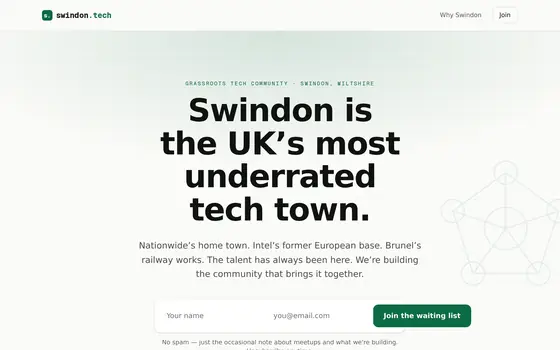
Tools, shops, platforms, a couple of games. I did not set out to make them unrelated — that is just where curiosity kept taking me — but the spread turns out to be the interesting part. A way of working that only holds in one domain is not a method, it is a speciality.
Some are polished, some are prototypes, one is barely a placeholder. None of them is earning its keep today, and I am not going to pretend otherwise. They are all here and all labelled honestly, because a shelf where everything claims to be finished is not worth reading.
The obvious question is how one person ships this much alongside client work. That answer is the whole point of the page.
Tools and apps

Turns text, a transcript or an audio file into a narrated video with AI-generated scenes.

Builds scored self-assessments that qualify leads by showing people their own gap.
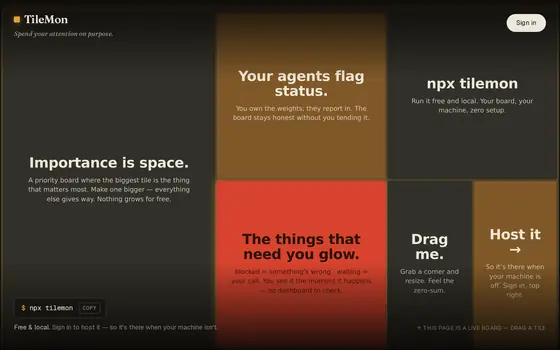
A priority board where importance is screen area and agents flag what needs you.
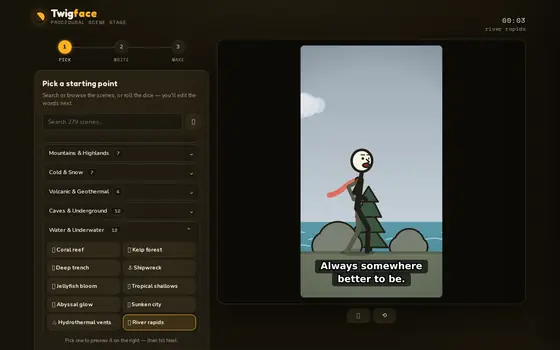
Type a script and it animates a narrated cartoon clip, drawn entirely from maths.
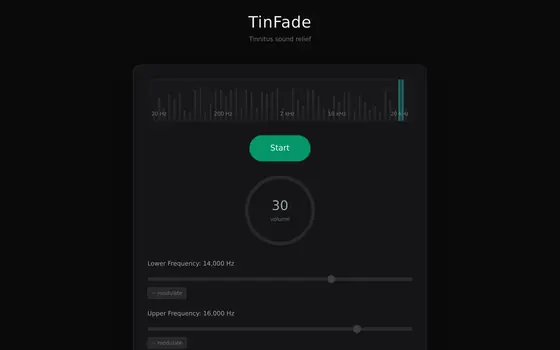
Shapes masking noise around your tinnitus frequency, then fades it down over time.
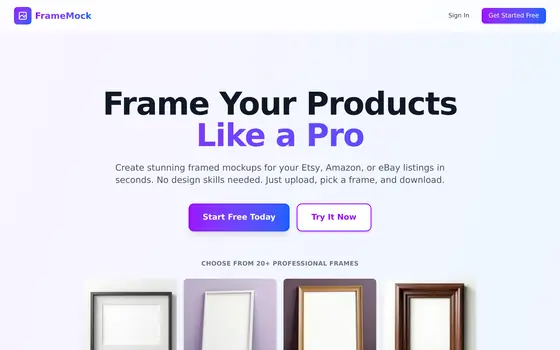
Drops product photos into picture-frame mockups, a hundred at a time.
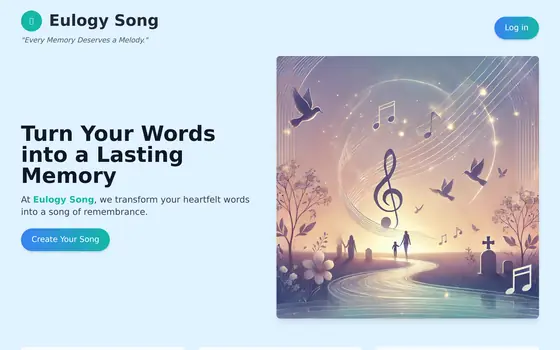
Turns the text of a eulogy into a personalised memorial song.
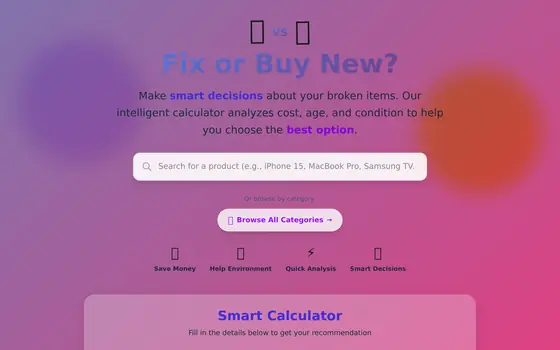
Tells you whether to repair a broken item or replace it, from cost, age and condition.
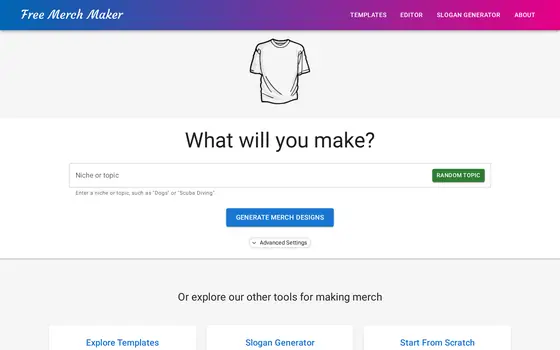
Type a word and it returns t-shirt designs built from slogans and stock imagery.
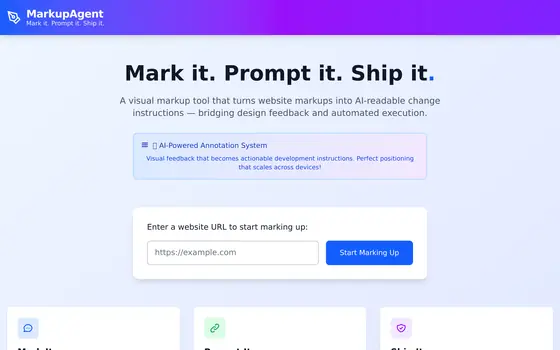
Comment on any web page, with the whole markup encoded in the link you share.
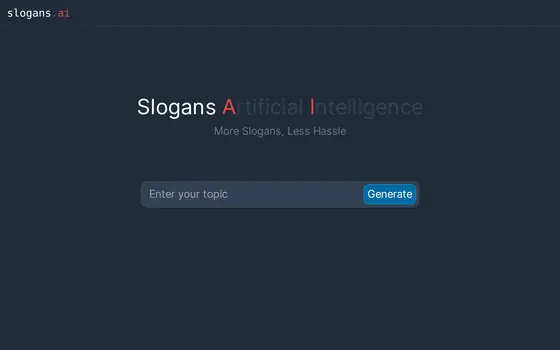
Type a topic and get ten AI slogans, each rendered as four t-shirt designs.
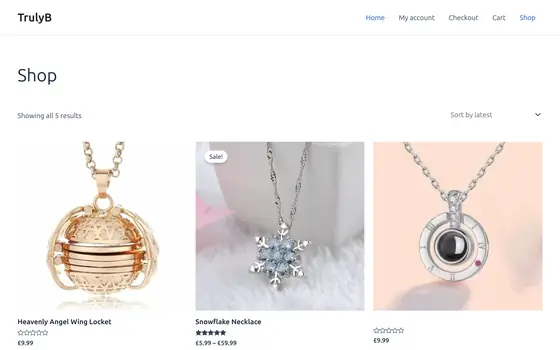
Shops and marketplaces
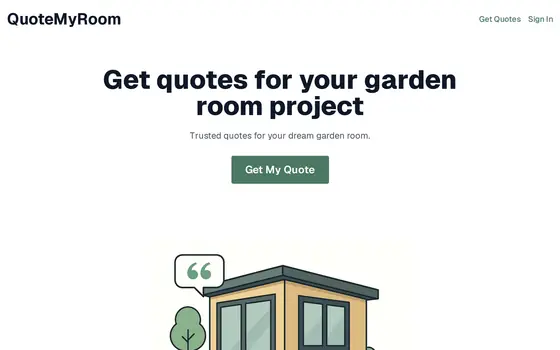
Community and platforms
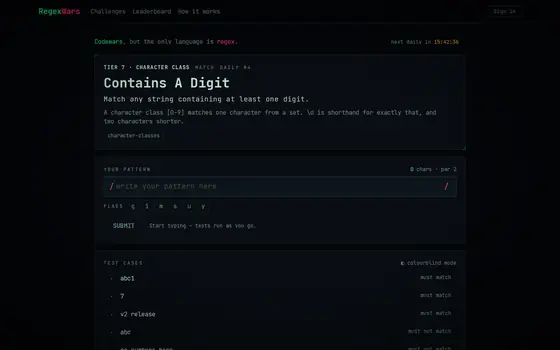
Games and puzzles

How does one person ship this much?
Not by working more hours. Every one of these was built alongside full-time client work.
It becomes possible once the boring nine-tenths of software — scaffolding, wiring, tests, the fourth checkout form of your life — stops being typed by hand. What makes that work is not the model, it is the workflow around it: a codebase an agent can actually navigate, conventions written down where they can be read, and the judgement to know which decisions to keep for yourself.
That system is the product. The Founder Technical Partner partnership points it at your venture.
And on other people's problems
A portfolio of your own products invites a fair question: does any of it transfer to a real team, with real constraints and someone else's codebase? These are the engagements where it had to. Much of the detail sits under NDA, so what follows is the shape of the problem rather than the specifics.

Doefin
Digital options exchange for Bitcoin mining difficulty
A prediction market for an unusually technical financial product, where the hard part is making blockchain mechanics feel as ordinary as any other web app. I work across the frontend and its web3 integration — wallet connections, transaction signing, and the long tail of states a chain can leave you in.
The measure of success is that nothing about it feels like crypto to the person using it.

Archax
Crypto and digital assets trading platform
A Series A trading venue that needed to scale, in a domain where a few milliseconds is a real amount of money. I worked on backend services with a focus on throughput and on what happens when a third-party API or a network link goes down mid-trade.
You cannot guess at performance here; you measure it. Most of the work was profiling, removing bottlenecks, and making failure boring.

OneBot
AI chatbot for IT service management
An LLM product that had outgrown its original architecture. I re-architected the core into something modular, made the model integrations reliable and cost-effective, and tightened the delivery process around them.
Built on Python, Next.js, MongoDB and Qdrant for retrieval. The outcome that mattered was a platform the team could reason about when something broke at three in the morning.

CloudMargin
Collateral management for financial institutions
The headline piece was integrating with AcadiaSoft, which automates margin calls for banks — event-driven systems on AWS (SQS, SNS, DynamoDB) where a dropped message is somebody's money.
Alongside the build, a good deal of mentoring and refinement work as the team grew, which is usually where the durable improvement is.

Nationwide Building Society
Digital banking platform modernisation
Retail banking systems in C# and .NET, but the piece worth reporting was leading the migration off TFVC onto Git across multiple teams.
That job is only nominally technical. The work is coordinating teams, moving build pipelines without stopping delivery, and persuading people that the disruption buys something worth having.

CDK Global
Automotive retail software at scale
Dealer management systems, including a long stretch inside KCML — a proprietary language with opinions of its own about what your code should do.
It was an excellent education in debugging, and in never assuming code does what it plainly appears to do. That instinct has paid for itself many times since.
If you are building something in a similar vein and want a hand, will@fortytech.co.uk.